


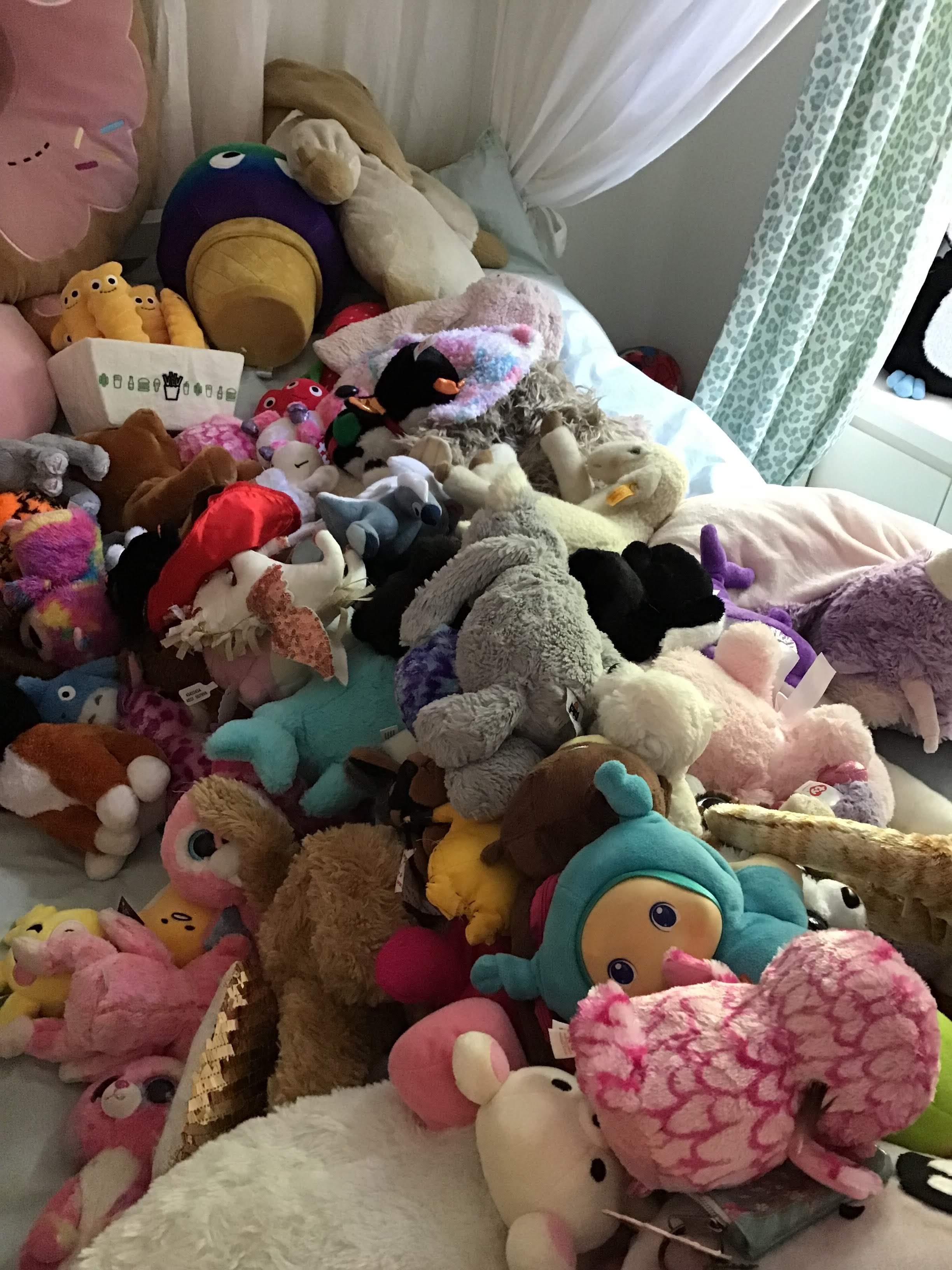
She loved them so much.
They took up most of the bed she slept in every night. Maybe she was on to something — being surrounded by things that made her happy isn’t a bad idea at bedtime.
But then we started talking about what each one meant to her. She was surprised that not all of them were as close to her heart as she thought.
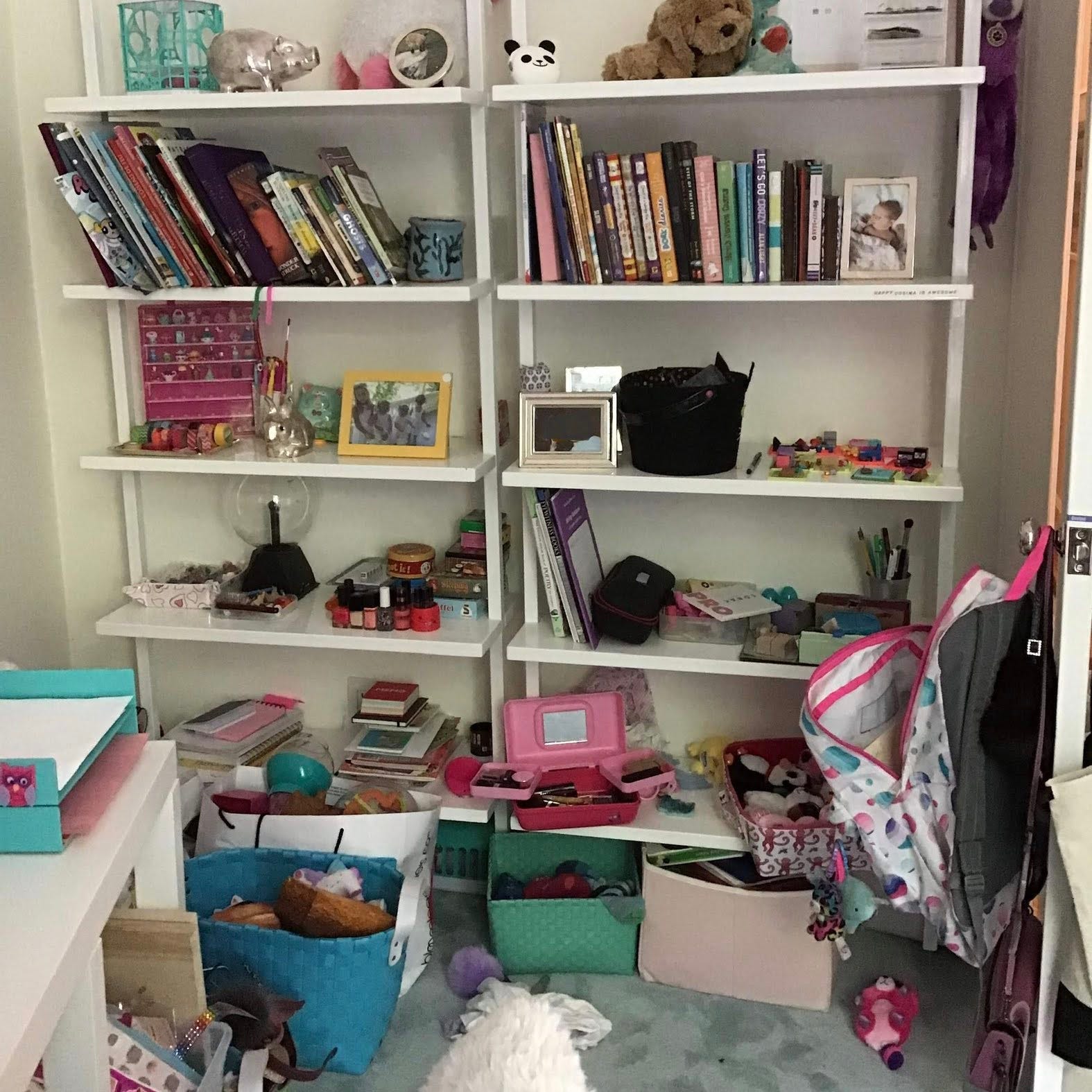
This was an in-person session with my 9-year-old client who had a large collection of stuffed animals taking over her bedroom. She loves to read, but realized she didn't have a comfortable space to do it. She didn't know where to put her things, and looking for something specific always ended up taking a lot of time and causing frustration.
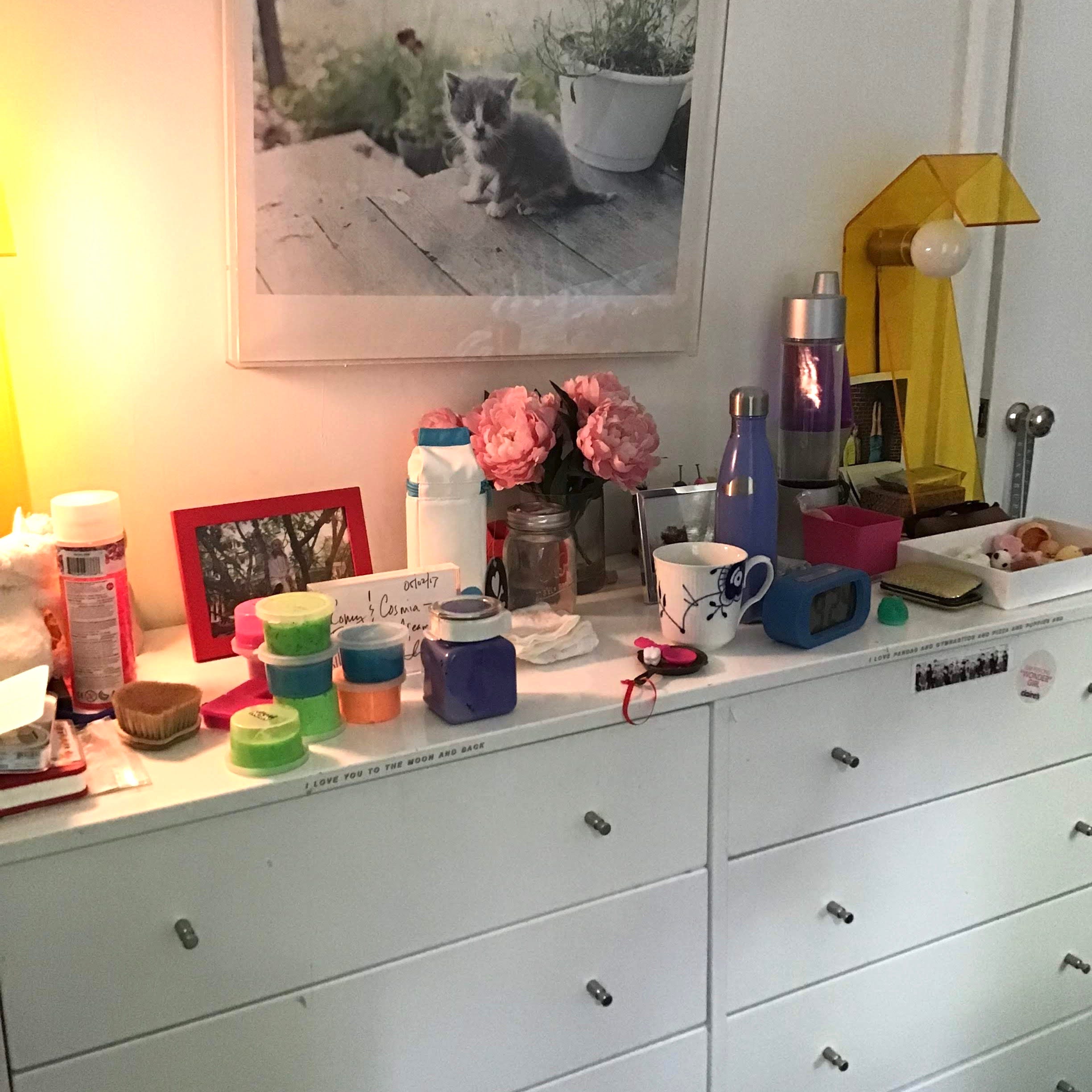
Her dresser top had become a place to drop things. She couldn't even enjoy the beautiful flowers. Looking for stuff was causing her a lot of grief.
We started by grouping similar items into piles. One by one, she shared stories about her “friends” and why some of them don’t mean as much to her anymore. Those she decided to keep were sorted into even more specific groups: by size, material, or theme. We did the same with everything else: stickers, erasers, makeup, gemstones, books, jewelry, sentimental items.
She did the work.
And I watched her gain confidence in her decision-making right before my eyes.
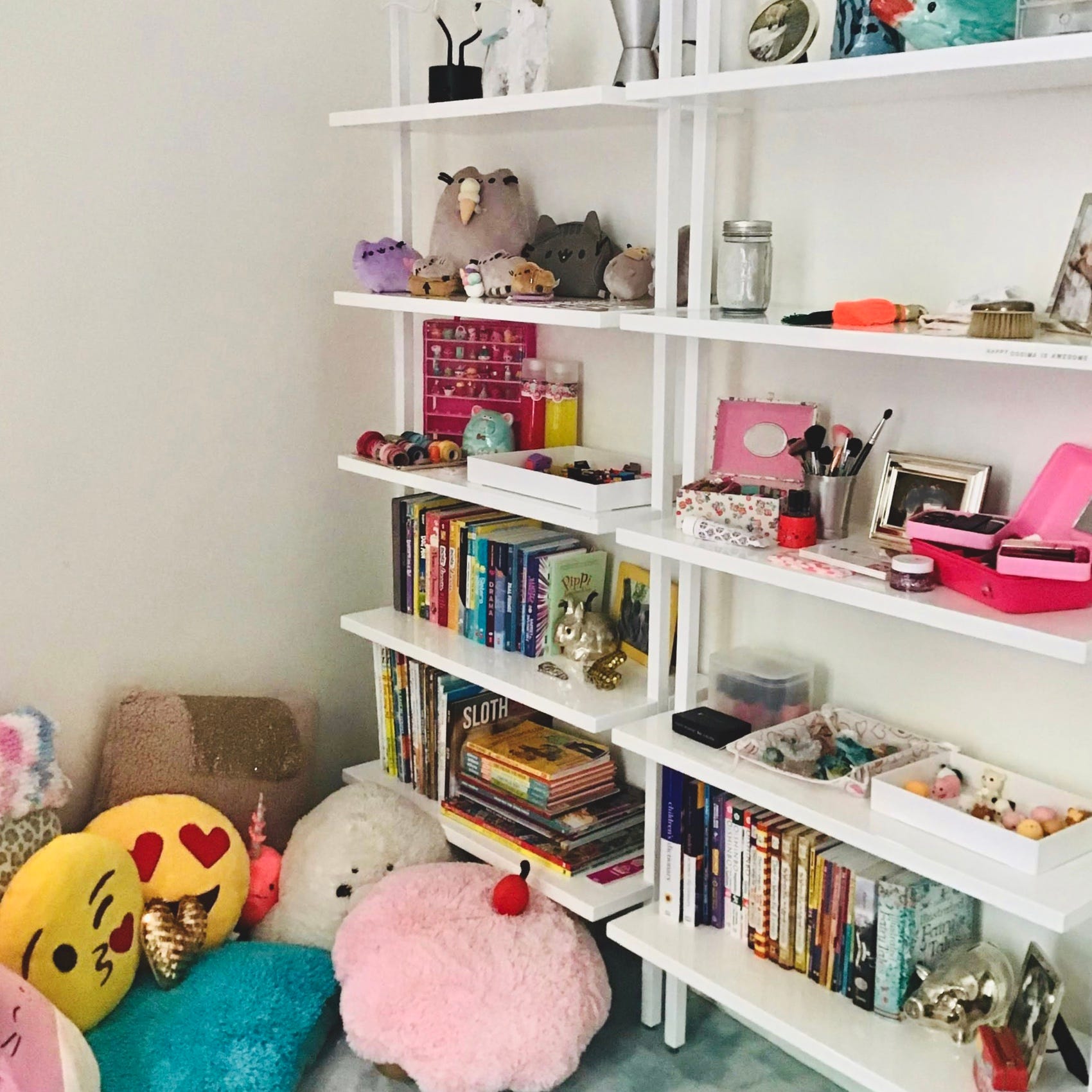
When it came to displaying what she decided to keep, we talked through which shelf made the most sense. By placing her larger, pillow-like stuffed toys on the floor, we created a cozy corner for reading. Books moved to the bottom shelves. More fragile items went to the top.
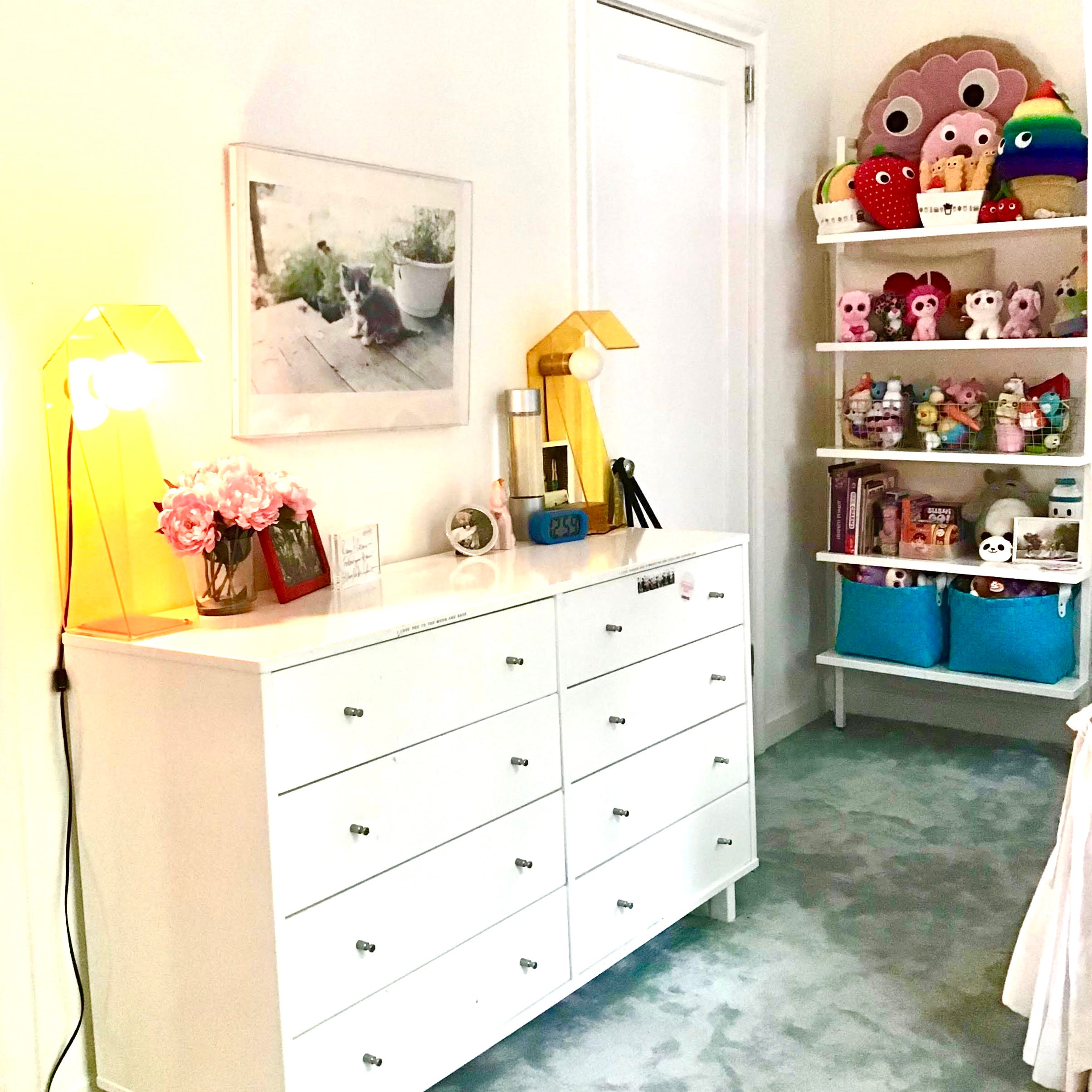
We cleared the dresser top and kept only what she wanted to see. She said she'll make sure not to let things collect, and she feels good knowing everything has a place to return to.
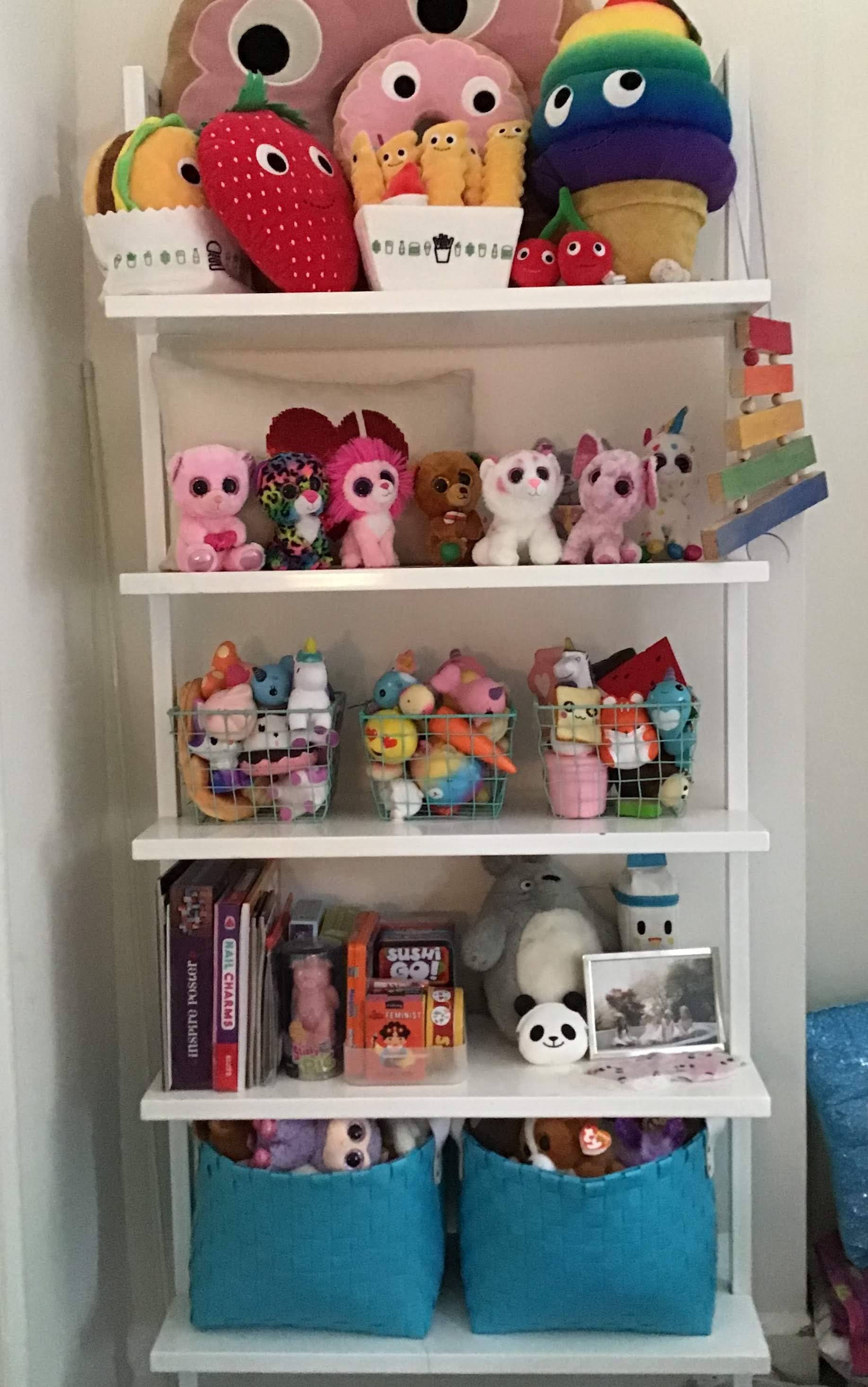
The higher shelves are the ones she likes to look at. The lower shelves hold things she likes to play with. The second-to-lowest shelf has games for when friends come over, with a small space for a cup of water at night.
“I like being able to see everything so much more clearly now!”
This kind of project wouldn’t be possible without my client’s participation. Only she knew what each toy meant to her. By involving her in every decision, she became the expert on her own collection.
And this is how I work with every family. Holding space for each family member to build those mental maps in decision-making.
I’m most proud when a choice is made with confidence and clarity, through exploring different ways of looking at an object and asking the hard questions without letting the stress of it escalate.
In nearly a decade, I’ve gathered those experiences into the Dooley Method to walk families across the bridge between connection-first parenting and home organizing.
As we work, parents learn how to organize their own belongings, how to let go, and how to pass those skills on to their children without getting stuck in a power struggle.
For $8 a month, you get access to the full Dooley Method library, live co-working sessions, and a complimentary consultation call. I’ll be right there with you to offer guidance, answer questions, and be in your corner along the way.
When you're ready, I'm here.
❤️
Home organizing is being honest about what you actually use, need, and love.
Parenting is being transparent about what you truly mean, expect, and when you’ve made a mistake.
The Dooley Method helps your family create space for both.
We adults often underestimate the kids
What a transformation!