


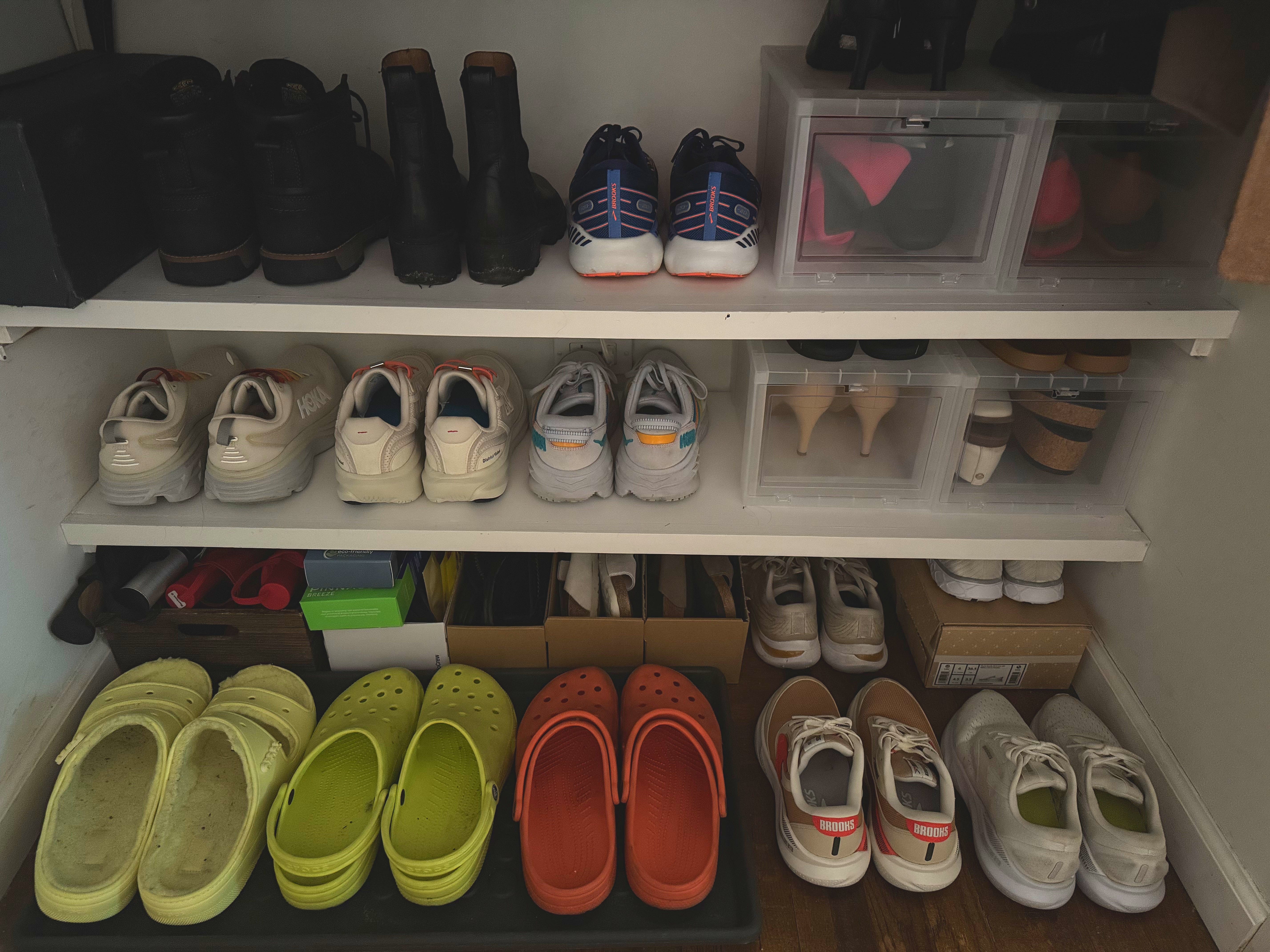
Every morning my husband and I walk our dog. Every morning I open our entry closet where our jackets are hung and shoes are kept.
It wasn’t bad. But small inconveniences, every day, add up.
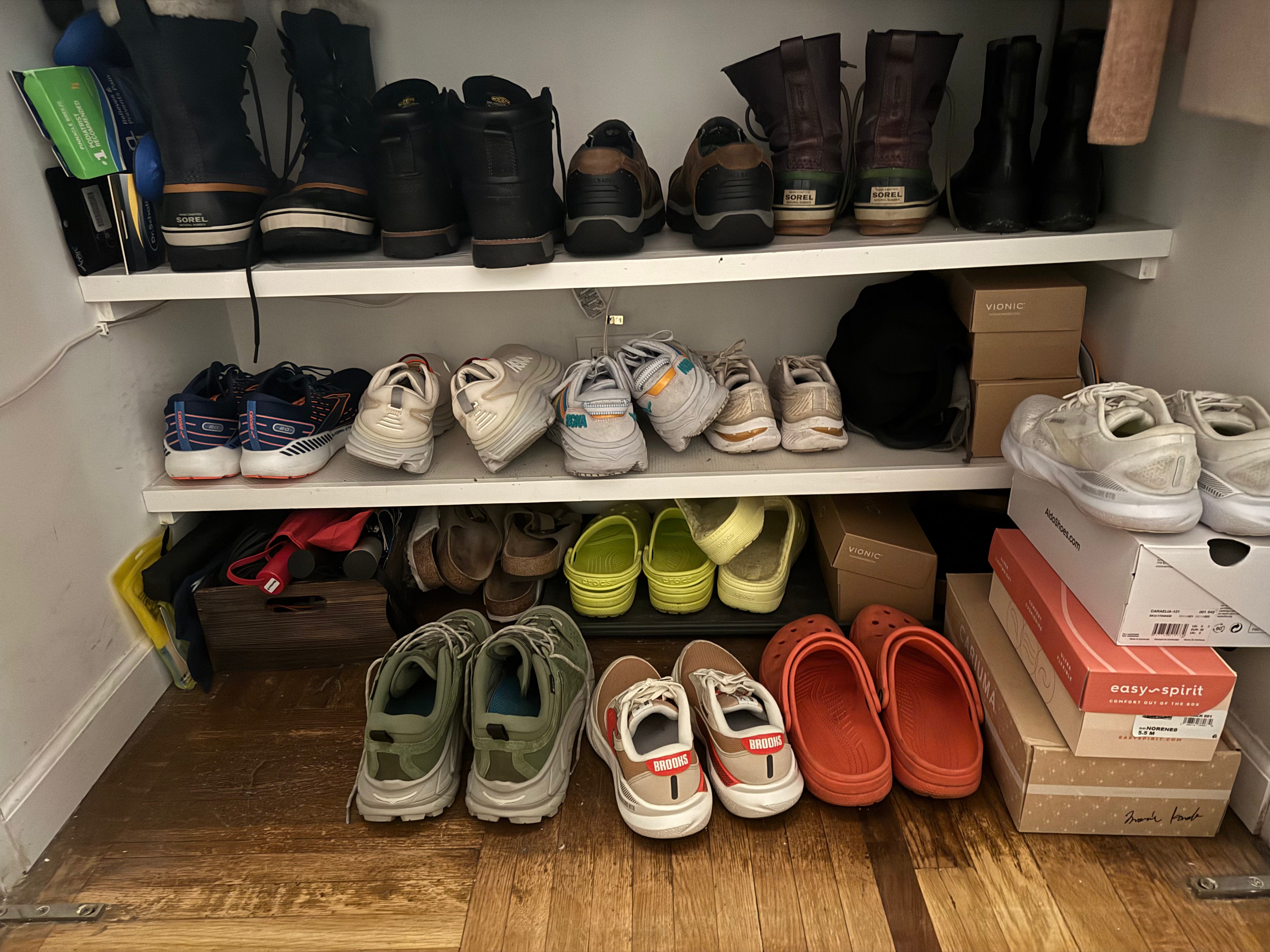
Here’s what wasn’t working:
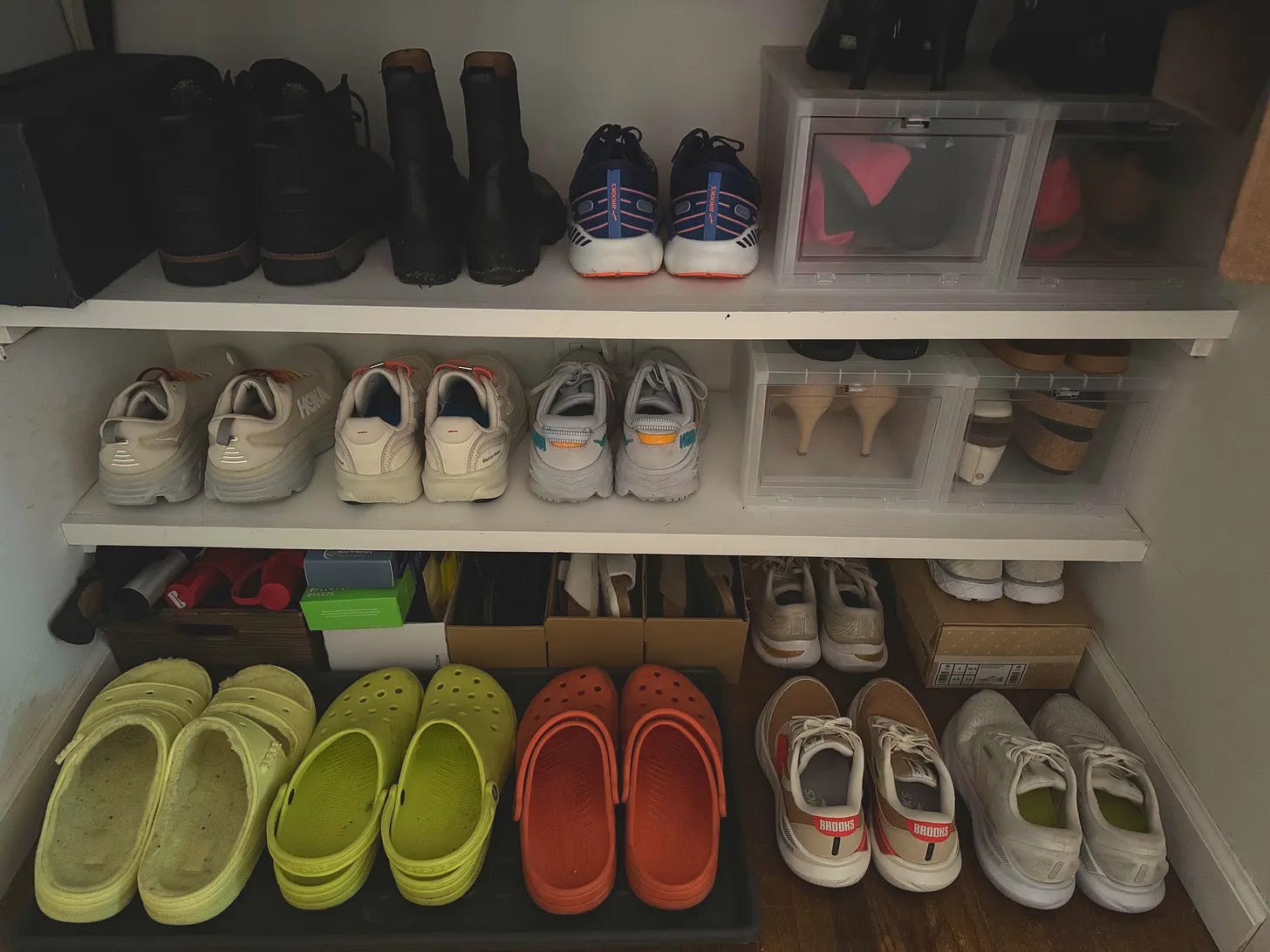
The winter boots were taking up prime real estate.
In-season sandals were in the back and hard to reach.
My summer flats were still in boxes, stacked unevenly. (I had gotten rid of my flats due to some foot issues, but that’s all been resolved and I’m excited to be able to wear cute flats again!)
I have 4 clear front-opening stackable shoe storage boxes on a top shelf of this closet but they’re too high for me to reach.
The first thing I did:
I gathered the winter boots and moved them to the top shelf where the clear shoe boxes have been — An easy step that actually made more sense for seasonal swap for the same amount of available space.
Storing flats and sandals:
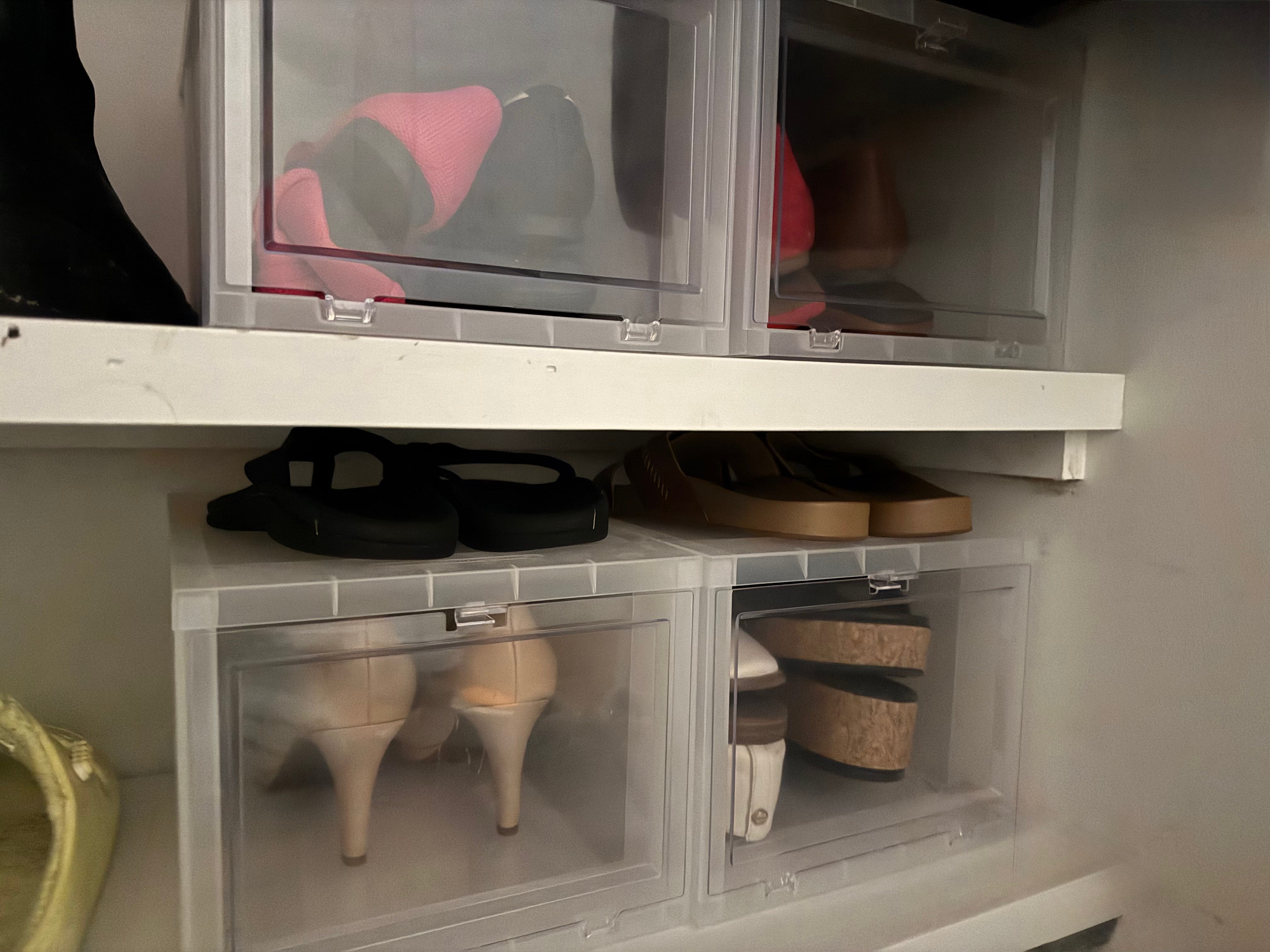
The clear front-opening shoe boxes were too tall to stack with the existing shelves. However, it created just enough of a gap for my sandals and flip flops! (I love those happy accidents.)
Other than the high heels, each clear shoe box holds two pairs of flats. I grouped my Mary Janes together and fun flats together.
A shoe tray in the back created a defined spot for the Crocs, which gave that whole section a clearer boundary.
Shoe inserts and extra laces got gathered into one box — contained, out of the way, easy to find.
No new products. Just what we already had, rearranged to match how we actually live right now.
Space-saving solution:
Sandals laid flat take up more space than we had available. So I repurposed my cardboard shoe boxes by cutting off the top panel to keep the sandals on their sides.
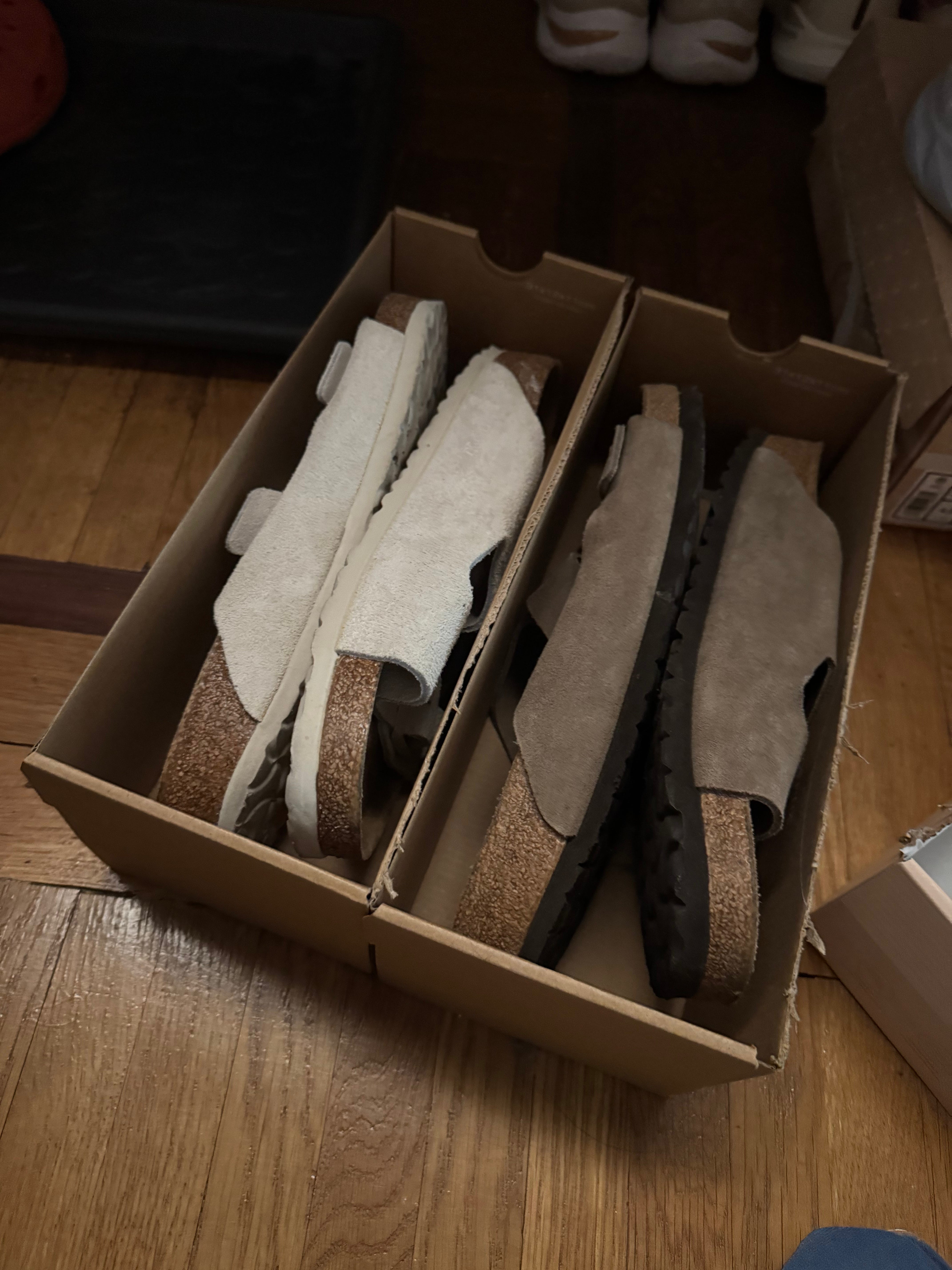
The solutions here are about visual boundaries. When each type of shoe has a defined spot, you just reach for what you need and go.
Looking at the final results again, here are a few things worth highlighting:
I grouped the boots and dark color sneakers together.
Non-shoe items stored here, like umbrellas and shoe inserts, are together
I used a shoe tray that we use for winter boots to hold the big Croc sandals. The tray creates the boundaries and they are easy to slip on and off without having to bend down.
Not a single new product. Everything here was already in the closet.
When seasons change, life gets busier, or when needs shift, it’s completely normal for a system to not work as well as it once did. That doesn’t mean the system is wrong or you failed to maintain it. It means it’s time for a small reset.
In just fifteen minutes, we feel daily relief every time we open this closet.
Organizing shoes with your kids, not for them
Kids don’t have as many pairs as we do, which actually makes shoes a great starting point.
Rather than putting their shoes away for them, try asking questions that get them thinking like an organizer:
Why do you think I moved the boots to the top shelf? Which shoes do you reach for most often — where should those live? What would make it easier to find what you need in the morning?
It’s not just about the shoes. It’s about understanding that where you put something is a decision made on purpose. That every item has a reason for its spot. And when things have a home that makes sense, putting them back becomes almost automatic.
Would you like to learn more ways to organize your shoes and accessories?
Below is the Organizing Accessories lesson for paid subscribers. For about the cost of a caramel oat latte with whipped cream, you can start using the lesson to put your jewelry, scarves, purses, and other finishing touches in order.
The step-by-step tools are yours to keep, plus access to more lessons that come with your membership. (From how to organize your closet, to the craft supplies, giving you time-tested decluttering and organizing tools for results that last.)
If you have any questions, feel free to reach out. I’m here to support your family’s journey to more calm and connection.
Joyfully,
Ann