


I’ve organized over a hundred pantries.
Every single one comes with its own challenges, but the answers are rarely found at the Container Store.
Often times it’s because I repurpose what my clients already have. Most of them have tried to fix their pantry problems on their own. But a few weeks later, the mess returns and they don’t understand why.
But organizing a pantry isn’t about labels or containers. It’s where you go when your son comes home from school crying and needs some of his favorite snack before he can share what happened. It’s the place you gather ingredients to bake chocolate chip cookies while your kids hover, waiting to lick the spatula. A full pantry can bring a sense of security, knowing you can put food on the table and spend time as a family.
The pantry has to hold what nourishes the family.
That’s where I comes in. Before I think about the organization, I want to know who uses the space. I find out who does the cooking and what they like to eat. If someone has a dietary restriction, they’d want to know their needs are being considered.
How we set up a pantry can also foster children’s sense of independence. They make decisions about what to eat, learn to serve themselves, and develop a sense of competence and respect by helping to care for a shared space.
I often wish parents would contact me sooner, because of all the money wasted on food gone bad in the back of the pantry. They could have avoided all of those h-angry meltdowns, or worse, rodent problems. (Yes, I’ve had some surprises during our sessions.)
Today, I want to share three of the most common pantry problems I see, through three families that went from opening the pantry door and feeling overwhelmed and stressful, to feeling ease and even joy. “I love to cook again!” is a phrase I hear often after a pantry session, and it warms my heart every time.
Problem #1: Your Food Is Inconvenient To Reach
This family has a toddler, a baby, and two parents who work long hours. Their mornings are hectic, full of coming and going. Lunches to pack for themselves. And snacks for the kids on outings with the nanny.
Often with a baby on one hip, they needed three different types of snacks within easy reach. They also needed the toddler to not be able to help herself, at least not yet.
They already had containers. They just weren't really using them. Most of the snacks were still in their original boxes. With everything hidden inside torn open boxes, it was hard to tell what was running low until it ran out. The drink cans never made it to the rack meant to hold them.
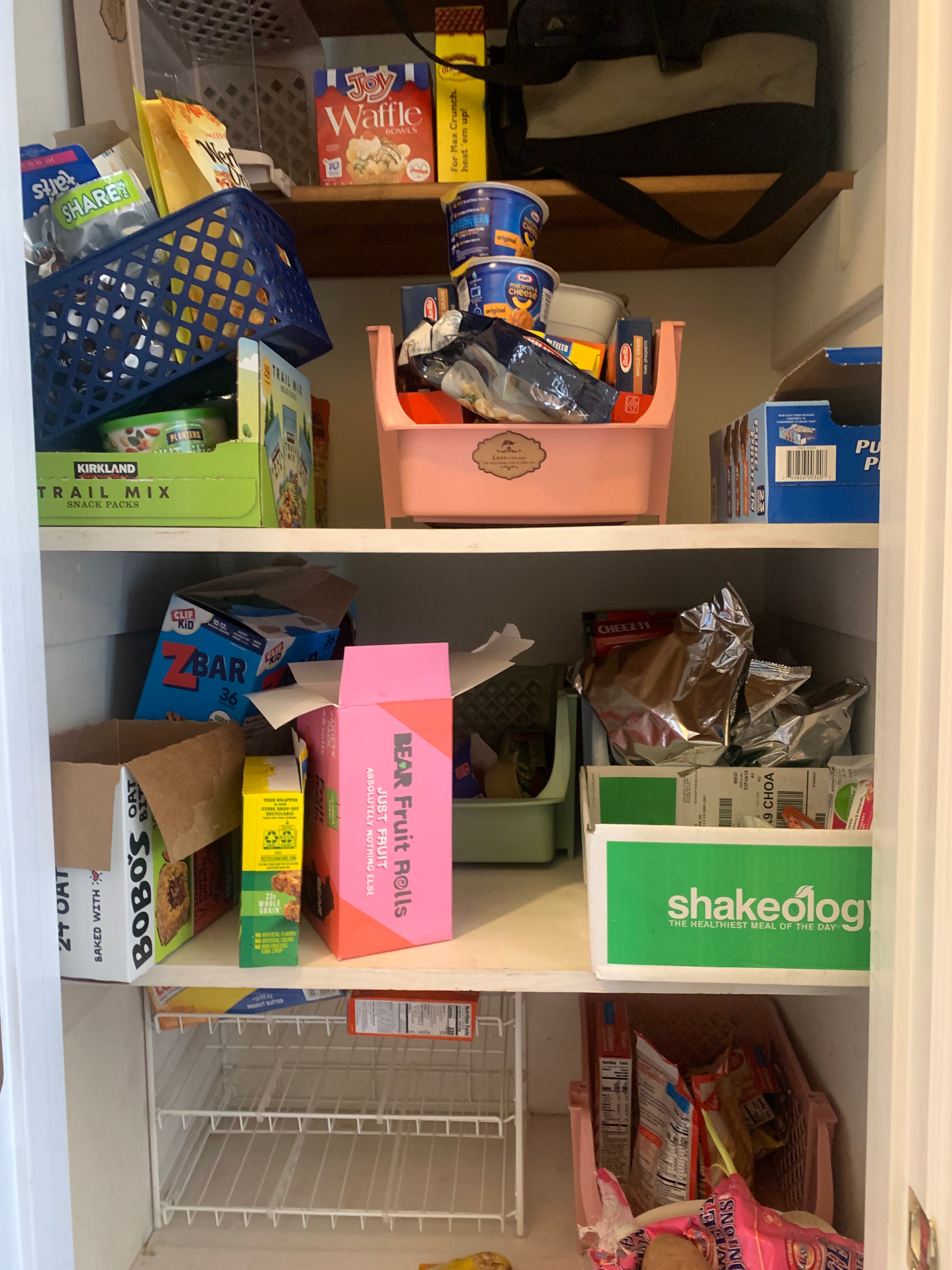
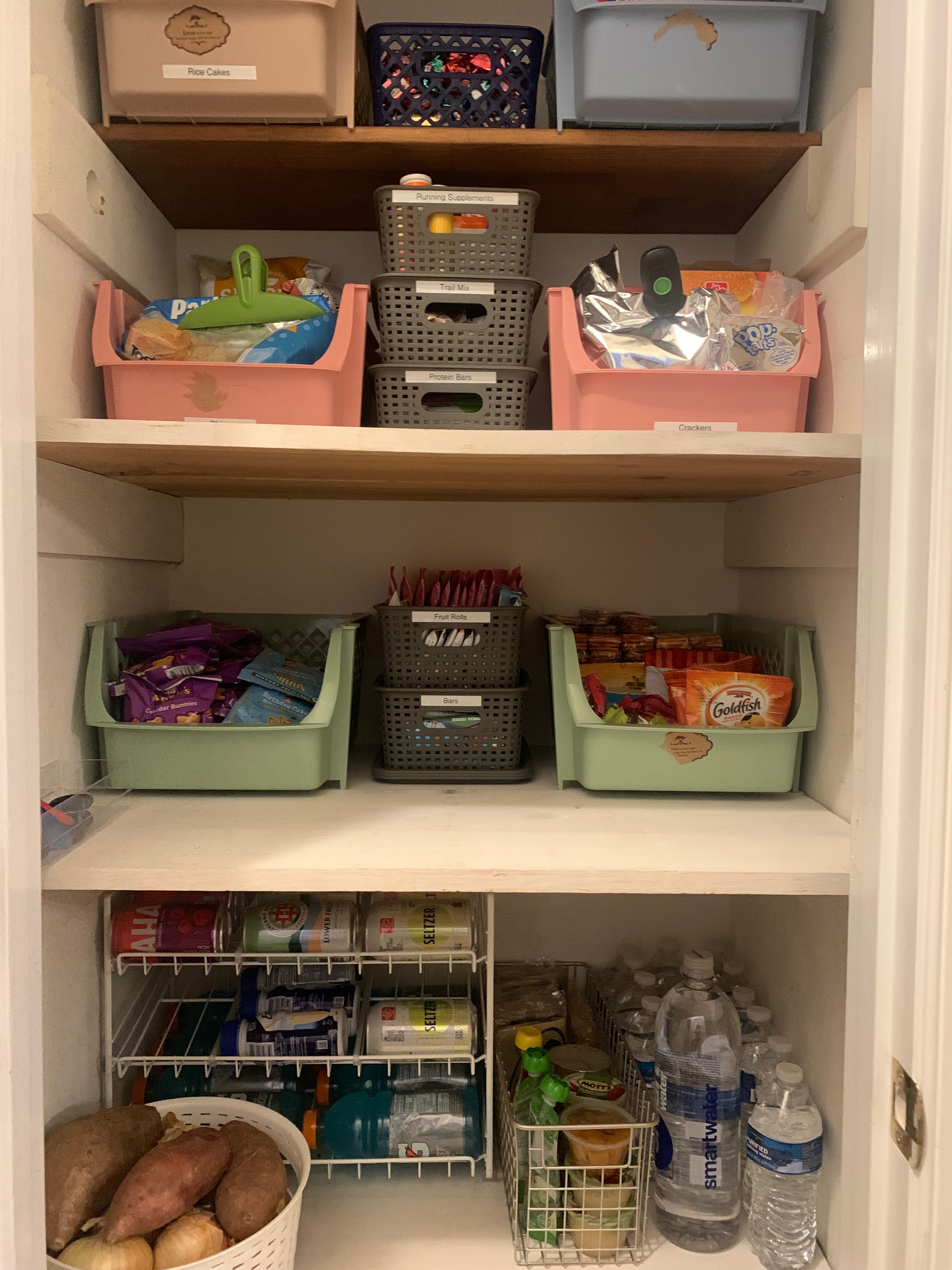
We used the containers they already had and gave each one a new purpose. The snacks came out of their boxes and into the bins, and only the covered, less frequently eaten snacks went inside stacked bins with added labels.
We designated each shelf by who eats the snacks. Grown-up snacks on the higher shelves. Toddler snacks next. Drinks on the bottom, along with applesauce and sweet potatoes and fruits if they had any.
When I followed up weeks later, they told me how easy it has been to be able to go straight to the shelf they need, grab with one hand, packing lunch bags takes a fraction of the time, and they get on with their day with a lot less stress.
Problem #2: Categories Are Difficult to Identify
This family’s pantry originally came with two shelves. For a while it worked. But when they started to stock up a little more, categories started to mix into each other, and the what they needed was often on a shelf out of reach. This was especially frustrating when the person who does the cooking and loves making meals for her family is petite and needed to pull out the step ladder multiple times a day.
We identified a few issues that made this pantry not so easy to access, especially when they use many canned foods every night, but they were at the hardest place to reach. The supplement powder they use every morning were stacked high enough that reaching for them felt unsteady. There were drinks mixed with grains, maple syrup next to the pickles. Nothing felt intuitive.
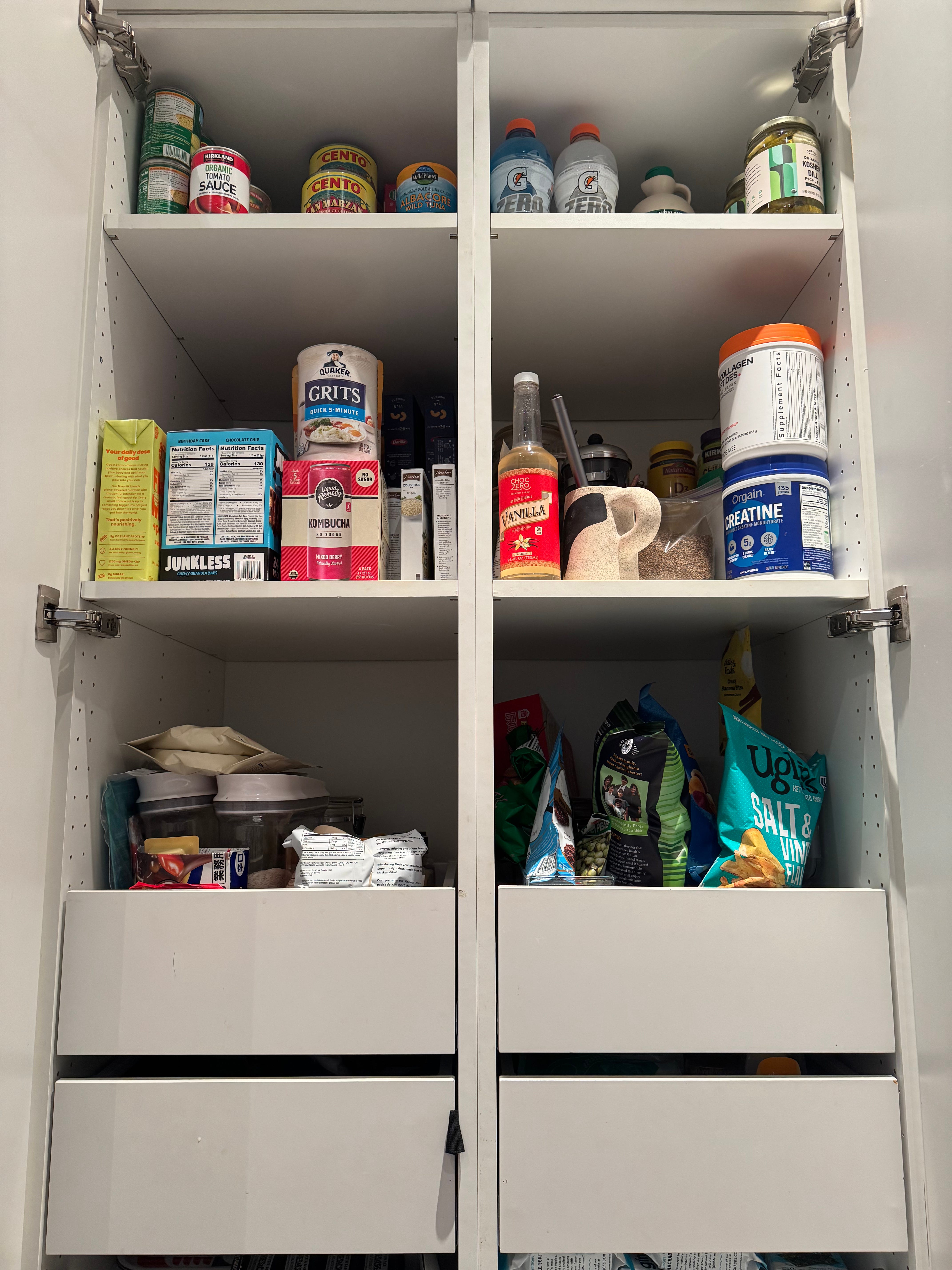
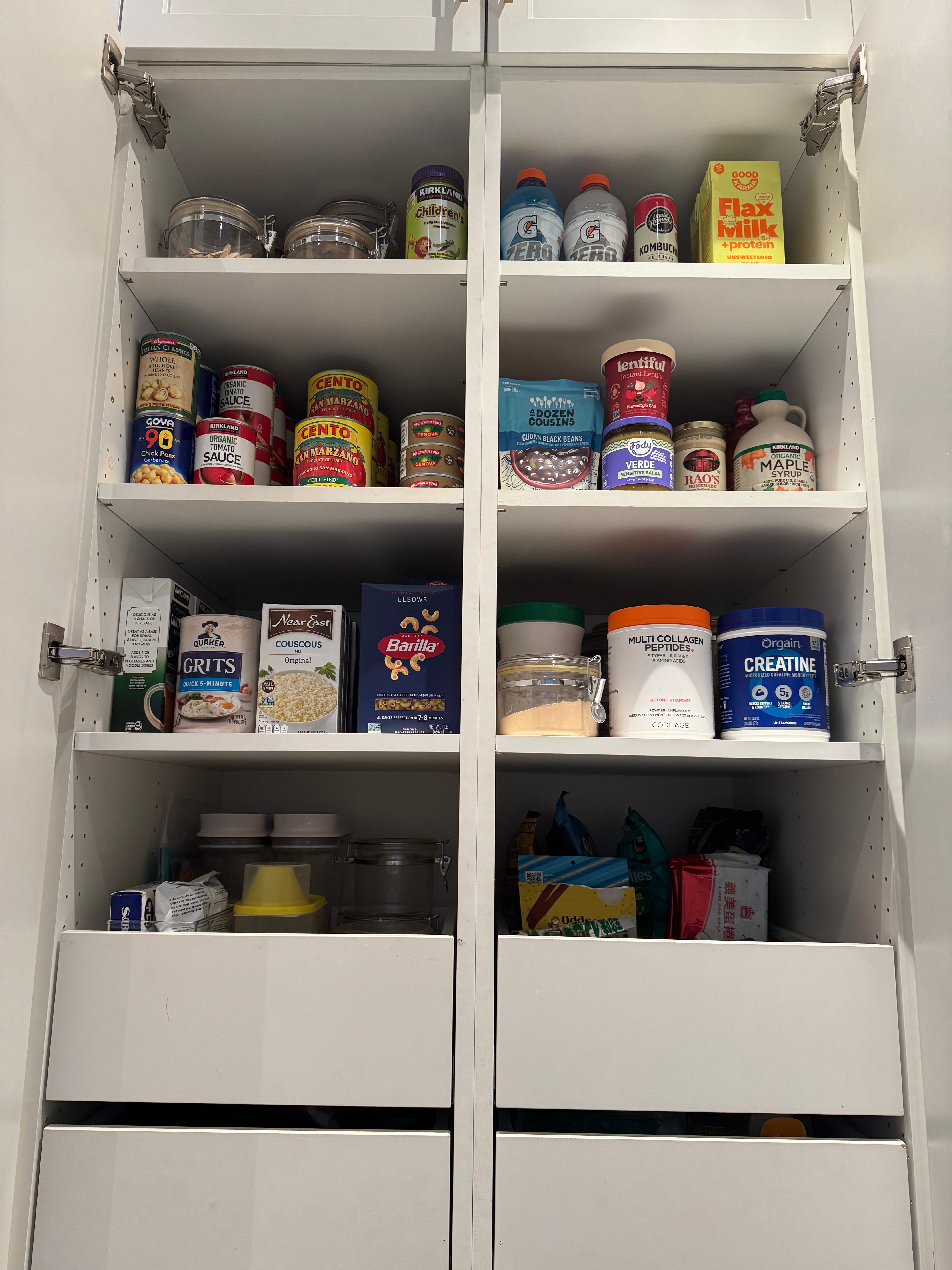
The only real change was adding one extra shelf on each side of the cabinet. Doing so made the lower 2 shelves reachable without a step ladder. Their morning drink mixes came down to eye level.
Now the pantry almost reads like a menu. Pick a pasta, add sauce and protein, and dinner comes together. It’s a system that doesn’t require any new containers or labeling because everyone can tell just by looking.
Months later, it still works the same way. Even after restocking, it feels like there’s still plenty of room and it’s so easy to know which shelf to put things away!
Best of all, mealtimes takes a lot less planning. Just look, grab something from each section, and voilà!
Problem #3: Shelves Are Overcrowded
This family has a three-year-old daughter and a baby on the way. Life was busy, and groceries got crammed in wherever they could fit, with the hope that nothing would come tumbling out the next time someone opened the door.
Over time, the shelves filled with more than food. Ziploc bags, plastic wrap, baking supplies, and even a few small appliances were buried behind everything else. Opening the pantry had become stressful, and it was creating tension between the couple, especially with a new baby coming.
When we took everything out, A lot of the food had gone bad. They had suspected it, but seeing it spread across the whole living room was still a surprise.
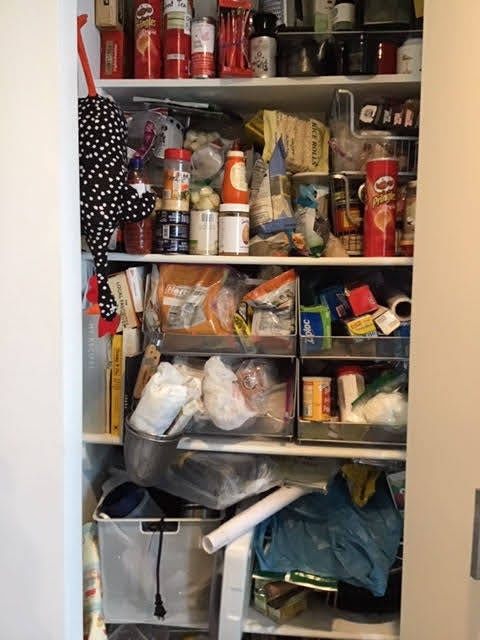
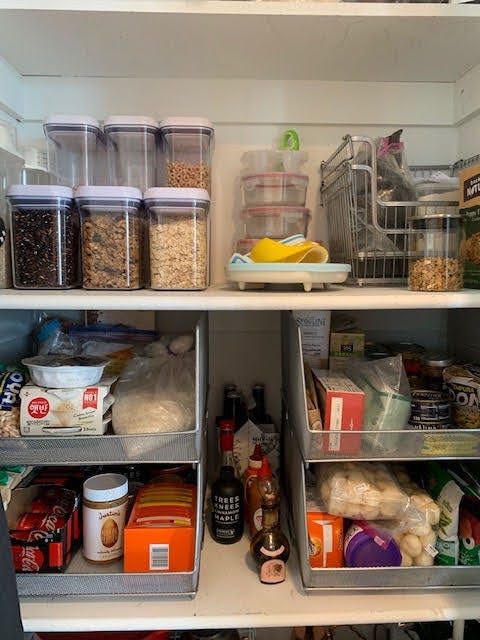
Letting go of the expired food made it easier to decide what went back in. The non-food items moved out of the pantry, which opened up room for clearer sections.
The airtight containers they already had finally got used. We also put together a baking kit and moved it closer to the oven so the dream of making cupcakes with their daughter could finally happen.
With less overwhelm every time they opened the pantry, the friction around it dissipated as well.
Three pantries.
Three common problems.
Each one started with the same question: how does this family actually live, eat, and move through this space?
Every system was designed around the life happening inside it.
Maybe you are facing a similar situation in your kitchen, or maybe you too have tried many times to organize your home but can’t figure out why the result doesn’t seem to last.
You are not alone. And if this resonates, let’s chat and find out what’s really going on, and how to make your home work for your family.
❤️
You don’t need more bins and baskets.
You need to be more intentional about what goes inside them.
I agree with what you said about not needing more containers. Sometimes we default to buying something as a way to resolve a problem. We forget that before adding something, it may be more appropriate to remove. After we remove what needs to be removed, we may end up with more space than we thought possible. Speaking from experience!