


A few years ago, I got on a call with a young couple who had just gotten engaged. They told me their therapist had suggested they find a home organizer.
I expected some tension. It wasn’t there.
They were warm with each other, easy and funny.
After speaking with them, I was elated to see how seriously they were taking this new chapter. They wanted a strong foundation before life got more complicated, and I admired that so much.
They lived in a one-bedroom apartment, small, but adequate. Honestly, when I saw their before photos, I was surprised. It didn’t look like they needed help at all.
I also know that sometimes the rooms look calm, but the stress lives inside the closets and cabinets. And as we talked, the fuller picture came through.
One partner found it fairly easy to let things go and was raised to keep clean. The other grew up with parents who held on to too much, and didn’t feel confident in making decisions on what to let go.
They had bought bins. They tidied for 5 or 10 minutes every night. Sometimes, when the anxiety got high enough, they’d get ruthless and throw everything out at once or move things into a rental storage unit.
And still, the mess would creep back in, especially in the kitchen since they both cook. They felt anxious and always behind. One of them shared something her mom used to say, that your space is a reflection of how you care for yourself. You could hear how much weight that carried.
Why a therapist?
This wasn’t the first time a therapist sent someone my way, and I’m grateful every time. It tells me more clinicians see what I see: the home is part of the emotional picture.
In a well-known UCLA study, researchers had dual-income spouses give video tours of their own homes, then tracked stress hormone levels and mood over the next three weekdays. For wives who described their homes as cluttered, stress hormone levels stayed higher through the day instead of dropping, a pattern linked to chronic stress and poorer long-term health.
Couples feel it too. In one national survey, 48 percent of American couples who were married or living together said they argue over clutter.
That’s part of why preparing ahead matters.
Research by Scott Stanley and colleagues found that premarital education was linked to about a 31 percent lower divorce rate, along with higher marital satisfaction and fewer destructive conflicts.
This couple was doing exactly that kind of preparation. They wanted to get ahead of it together.
Where we started: a vision
Before we touched a single item, we created a vision together. I asked what they wanted home to feel like and what a good day there looks like.
They described:
Natural light, clear counters, open floor space
The smell of banana bread baking
Rain and city sounds outside
Journaling, reading, lots of books, fresh flowers
The dog chewing a toy while they watch a show together on the couch
The words they kept returning to were tranquil, warm, joyful, and at ease.
Then I asked what it would mean for them to live that more often. One wanted to recharge without feeling pulled to keep cleaning. The other said it would be wonderful to feel capable and hopeful that things can change.
They told me they already felt close in many areas of their relationship. The organizing was the missing piece.
That vision became our compass.
Every decision after that went back to it.
How we got there
We started with their clothing and worked through each category from there, so nothing got missed. Each one gave them practice deciding what to keep and what to let go, and with practice came more clarity on what matters to them as a couple.
Then I got to know how they actually live.
Mornings started slow. We set up a coffee station and gave them a spot in the living room to meditate and journal. Everything for the dog’s walk is accessible in a cabinet by the door.
Work days happen at home for both of them, which is a lot to ask of a one-bedroom. We created two separate spots for calls, and put all their gym gear in one drawer so a workout is easy to fit in.
Evenings are for connecting and reading. We sorted their books between the living room and the bedroom, so the ones they read before sleep live right by the bed.
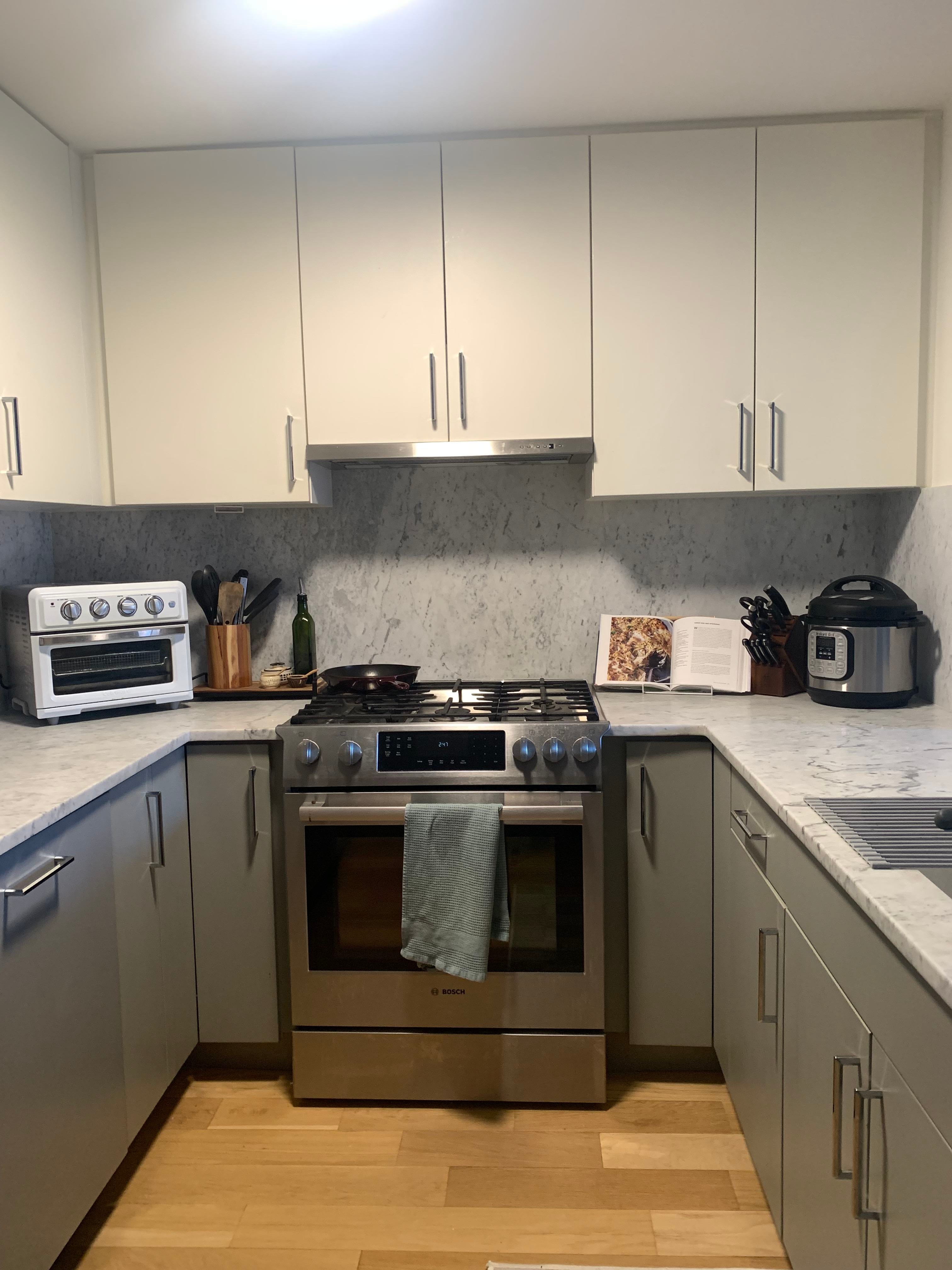
Weekends are for baking and slow living. The small appliances they used often stayed on the counter, and we even got the tools out to customize a slide-out shelf so the stand mixer fits in a kitchen cabinet.
Every space traced back to their vision. Each piece came from listening to them, then problem-solving together.
Looking back, I can see why their nightly tidying never held. The bins and the 10-minute resets were working on the surface. What changed things was connecting four pieces: what each of them carried emotionally about their things, a vision they shared, how they really spend their days, and the skills to keep going without me.
That’s why the results last.
Three years later
They’re married now, and they have a child. I haven’t heard from them for help, and that’s the best outcome I can hope for. It means they have the skills.
Every so often I see them on social media, cooking in their kitchen. The counter still looks just the way we set it up. It makes me smile every time.
Here’s what my clients wrote:
“Working and learning from Ann has changed our lives for the better. The process, from start to finish, was integrated, holistic, pragmatic, and thoughtful. We went from feeling stressed and anxious around our belongings to content, at peace, and confident in our ability to make decisions for our family. Our home is now organized and we understand the system that got us there, which we can turn to for years and years to come. Hiring Ann was one of the best investments we’ve ever made as a couple and we’re so grateful for her patience, generosity, kindness, and wisdom!”
Coming back to that first call
What stays with me is how much intention they brought, treating each decision as part of building a life together.
Organizing together gave them more than clear counters. They practiced noticing, deciding, and following through as a team. They carried that into their marriage, and now into parenthood.
Whether you’re like this couple preparing for a new chapter, or noticing your home is part of the friction, it may be time to look at what’s not aligned. Book a free Connection Call, and we’ll see if I’m the right fit. If I’m not, I’ll point you in the right direction.
Sources:
Absolutely brilliant - if only more therapists recommend this approach!