


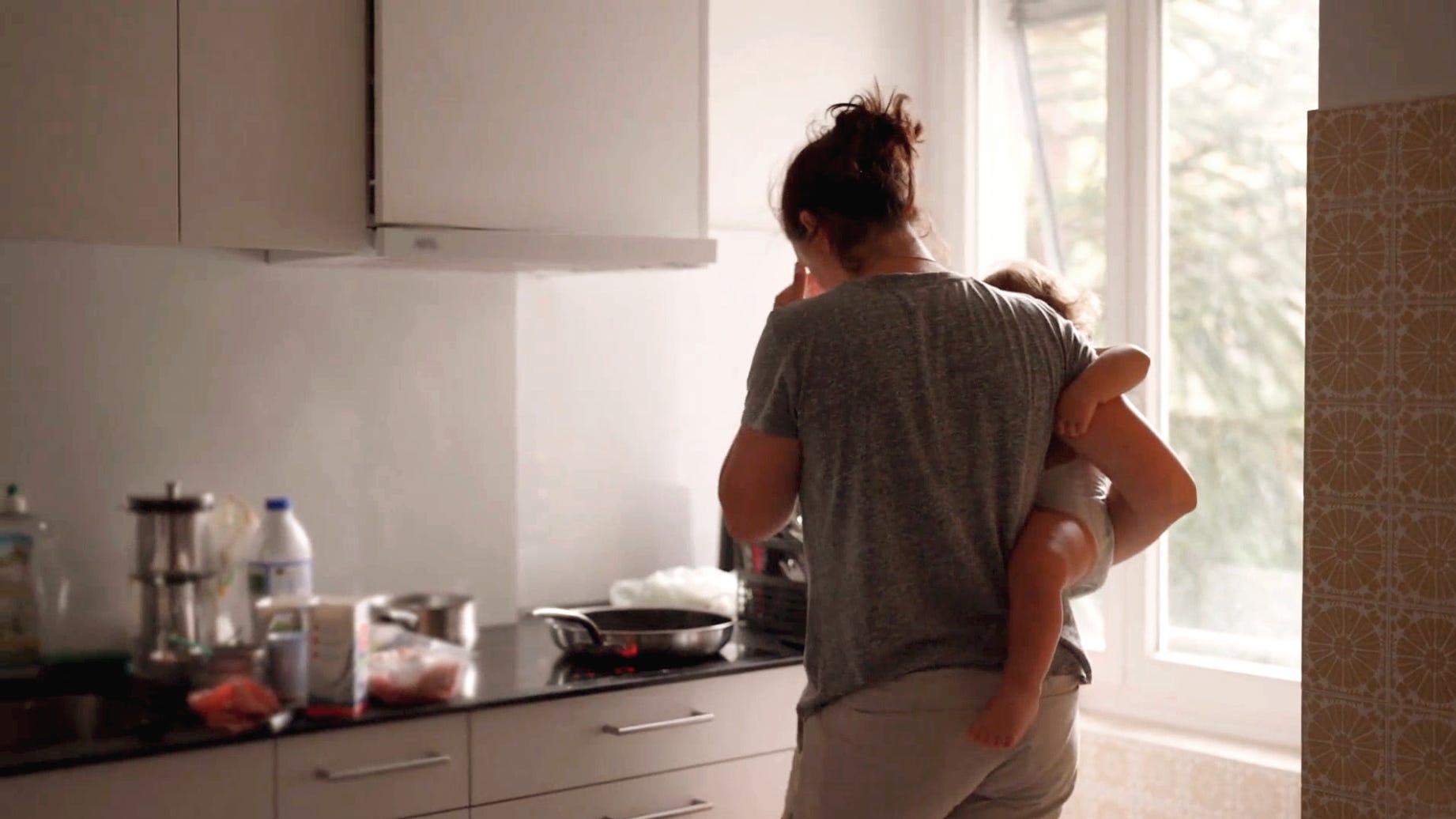
Over 2,000 hours of organizing people’s homes have taught me a lot about working with parents who’ve had it with clutter.
Many of them labeled their children as messy and irresponsible before we began. Parents who couldn’t think straight when all they see is clutter wherever they go in their homes, and those who were frustrated being the only one handling the work.
Some of them had previously hired a home organizer. Like an episode of HGTV, these families returned for the big reveal after the organizer spent hours on creating the dramatic makeover.
The family remembers the relief of finally seeing their kitchen counter. But a few weeks later, their home was back to feeling cluttered, the systems fell apart, and they felt disappointed — resigning themselves to waiting until the kids leave for college to feel order and calm again.
Here’s the truth. It’s not that the organizer didn’t do a good job.
The problem is that home organizers work differently, and families need to find someone who can not only set up the systems, but teach the family how to maintain them.
And it’s not just teaching the moms.
When I first started organizing, moms were the ones who reached out — until I realized the division of labor was making organizing a source of friction within the family. The difference in each family member’s skillset, motivation, and method had different levels of impact on the outcome and the amount of stress they brought on.
A more effective approach for families is one where everyone knows where things go, why they’re kept there, what happens when something new comes in, and how things get put away.
Furthermore, organizing for families isn’t only about the aesthetics. It’s also knowing what to do when kids’ drawings start to pile up but they refuse to let go, how to hold boundaries when going shopping, and what to do with kids’ treasures that to you feels like junk. I personally have been guilty of buying a small toy every time I went shopping when my son was little to keep him from having a tantrum in the store.
So finding the right home organizer begins by checking to see if the person can provide you with the knowledge needed to maintain the space after they leave. And ideally, someone who is comfortable working with children to close the gap for household responsibilities.
And if you’re wondering what other factors helped families decide to move forward with working with someone like me, here are 7 things parents have shared that helped them take that step.
1. They understood what happens during sessions before they started.
Does the person you’re looking to hire give you a glimpse of how they work? I always recommend starting your search by reading reviews or finding someone through word of mouth. Then, see if you can talk to the potential hire to get a sense of what the sessions might look like.
When parents first reach out to me, we always start with a complimentary consultation to understand your family’s needs. I welcome kids to join because it piques their curiosity and they feel excited about having an opinion on the potential changes in their home.
If we feel like a good match and they book a session, we start with the parents’ bedroom. Why? Because being a parent is hard work, and you need proper rest and time to quiet your mind without being surrounded by clutter.
Prioritizing the parents’ room helps increase capacity, reduce the stress and urgency around the rest of the home, and sets up a kind of showroom — a model for the children of what an organized space looks and feels like.
Then we work through the home together — clothing, books, paper, kitchen, bathroom, toys, and sentimental items — with children working on their belongings to build self-confidence, muscle memory, and internal motivation.
Along the way, we figure out routines and systems that make sense for your family. I include email follow-ups to keep parents on track between sessions. Accountability is crucial to building the momentum and stamina to get the whole home in order.
2. They realized they didn’t need their partner to be fully on board to start.
As mentioned, it’s common for moms to be the ones who reach out and take on the whole organizing project. When that happens, she can end up continuing to carry the mental and physical load — putting more strain on the family dynamic.
Every family looks different, and I work to meet you where you are. Ideally, having both partners involved creates shared understanding and knowledge. But when that’s not the case, we ease into the process a little slower — because sometimes resistance comes from feeling uncomfortable with change, which is completely normal when you’re used to your home a certain way.
As long as there’s a willingness to keep an open mind, it’s often that the other person sees the difference in their partner’s storage spaces and slowly becomes more interested in the process.
3. They stopped worrying about whether their kids would cooperate.
Most children respond well when an organizer makes their room look brand new. But some feel unsettled when they don’t know where their favorite things went. That’s why finding an organizer who will include children in the process — rather than doing it for them — matters.
The Dooley Method approaches organizing with kids by creating the conditions that invite them to try. Children practice making decisions throughout the process and build the confidence that they can do it themselves.
That’s what creates lasting results because the skills to maintain order start from the beginning. When parents are also learning, they show up with more empathy and patience while being more skilled to offer guidance and support rather than take over.
4. They accepted that the kids’ spaces come last.
One of the most common requests for home organizers is to start with the kids’ room, playroom, or kitchen. And I completely understand why — those areas create the most daily chaos and frustration for parents.
But focusing on the kids’ spaces when the rest of the home also needs attention, when children don’t yet have the skills to help on their own, when the decision to declutter or organize was made without children knowing or understanding what will happen and why it’s necessary — these are all ways this project can create emotional distress that leads to resistance and power struggles.
Working with a home organizer who understands that will allow children to ease into the transition by watching, participating in small ways, and developing enough curiosity that they’ll welcome the change.
5. They made peace with the timeline.
If you’re single or have a partner who is equally interested in getting organized, hiring someone to organize while you’re out would give you the reset you needed to quickly enjoy your home.
However, lasting results for parents with young kids comes from making time to work and learn from organizers who provide that type of service. That means it may take longer for the overall transformation. But you will definitely see dramatic changes after each session to motivate you to continue.
There are also several factors that can affect the timeline:
The size of your home
The amount of clutter
Your family’s availability
The skill level of where everyone is starting from
With kids, their motor skills, exposure, and associations with clean-up time all play a role.
On average, small families I’ve worked with in New York can complete their whole home between 30 and 50 hours. (Fingers crossed no one gets sick during those 3 to 6 months.) Families do get faster with practice and often their growing confidence allows them to take on more on their own between sessions because the process is so rewarding.
The goal is steady progress that fits your family’s schedule and builds long-term habits.
6. They did the math — and it changed how they thought about the cost.
Hiring a home organizer is not a decision to take lightly. But not hiring someone may already be costing you more than you realize.
During organizing sessions, many people discover forgotten containers holding things that haven’t been used in years. Brand new items purchased for the thrill of shopping. Stuff left in the back of a closet that you never really liked in the first place. Some families spent thousands on renting storage lockers where most items eventually ended up in the garbage.
Here’s a simple calculation worth sitting with.
If roughly half your home is taken up by clutter, take what you pay in rent or mortgage each month and divide it by two. That is how much you’re already paying every month for unusable space.
Multiply that by twelve.
Then by the number of years you’ve lived this way.
And the truth is, most families I’ve worked with found they could recover the investment for hiring a professional organizer — and then some. One client sold the car she never drove but had been paying insurance on for over two years.
I’m not a big spender myself, and I know kids are expensive. But I believe in investing in quality of life and in the skills that continue to reduce tension at home. Ultimately, like any decluttering decision, it’s one that families need to feel confident and clear about.
7. They stopped waiting for the perfect moment.
Every family I’ve worked with told me they wished they had reached out sooner.
But it’s easy to keep putting it off. After the holidays, things will settle down. Once summer camp starts, we’ll have more time. When the kids are a little older, they’ll be more ready. When we have a little more money saved up.
And meanwhile, the pile stays. The frustration builds. The conversations about who left what where happen again and again. The kids keep getting the same feedback — messy, irresponsible, not listening — without anyone showing them a different way.
Nothing changes because nothing new was introduced.
Sometimes the call comes when families have genuinely hit a wall — staring at the same pile, freezing up, and realizing they don’t know how to move forward on their own.
The way to break any cycle is to interrupt it with something new.
If you’ve been sitting with this, I hope these reasons helped give you some clarity. And if you feel some shift in how you feel about working with someone and I seem like a good fit, I’d love to have a conversation. No pressure, no commitment — just a chance to talk through what’s feeling hard and whether working together makes sense.
Ann Dooley is a certified home organizer and parent educator based in Brooklyn.
She works with families in the New York area and virtually — helping families organize together through connection, build lasting habits, and create more calm at home.
yes it’s important that whoever you seek to help you do something with or for you, is someone that you feel “gets you / emphasise’s with you / is the right fit…”.
💯 there’s no one size fits all.
But that person/s seeking the help need to not just want that help but want to change, if they are a big part of the original issue.
Eg in your example unless the solution provided is “so fool proof” that the initiators can’t do anything except be tidy, then it’s likely I’d say that one or more has to change.
And that requires them to want to change. If not then solutions are unlikely to stick.
Nice article, got me to engage, found my way here from @Chris B Writes two for Tuesday chat.