


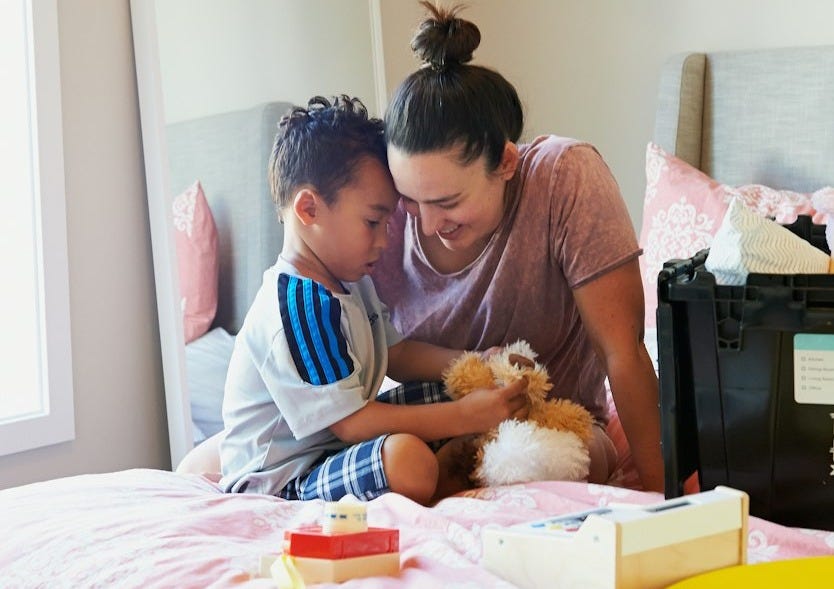
You gave them a 5-minute warning.
You said with a smile “Hey, did you guys hear me?”
You tried to hide your frustration and said in the nicest tone “I guess you guys don’t care about these toys, maybe I’ll give them away.”
The kids jump up “No! We want them. We’ll put them away.”
Does this happen in your home?
Many years ago, that was my go-to solution. I didn’t raise my voice, so I thought that was practicing gentle parenting.
But a calm voice doesn’t change the fact that it was still a threat of their toy getting taken away.
It was not letting them experience a natural consequence; instead, it was power over them.
The lesson I learned was they needed something to be afraid of to take action.
And they learned to comply even if they didn’t want to.
What's actually happening
From the parents’ perspective, taking something away was fine as long as the intention was to raise responsible children.
The trouble is that responsibility, not just putting things away, is an abstract concept. Children don’t have the mental capacity to process it until they are around 8-12 years of age to understand accountability, impact on others, and owning consequences without being prompted.
What toddlers and children under 8 are motivated by is a combination of sequence of events and our reactions to their actions.
It’s as simple as: mommy looks happy, I feel safe, I’ll repeat that action.
Of course they also will test the limits and learn what actions lead to us getting angry, and take note of what to avoid.
We also live in a culture where rushing and short attention spans have become the norm. So when we don’t see immediate results, we end up putting pressure or take over.
Have you ever waited to start dinner or laundry until you’ve finished answering your emails? Children’s play is their work. They also have less ability to control their impulses, or the ability to think ahead that dinner will be ready soon, even when you explain it to them!
We forget that we also don’t like being told what to do, but expect children to not only do what they’re told, but also to do it happily.
And often we don’t realize a simple task for us, may still feel challenging to a young child, and if left to do it alone, or if the toys are scattered everywhere, it can feel very daunting.
So what to do instead?
As mentioned earlier, play is work for children. And they are internally motivated to be playful. So using that to your advantage, here are five fun and engaging ways to make clean up time more exciting:
Note: Before you start these games, two things.
First, let the children know what comes next on the agenda. For example:
“When we finish, it’s time to wash your hands and come to the dinner table. Do you want apples or grapes as your fruit tonight?”
“When we finish, it’s time to wash up before bedtime story. Do you want to pick a book or let me choose?”
Second, these games work best when parents are modeling keeping the home tidy because double standards create confusion and unfairness, which children care very much about. But these games work even better when the roles are switched too, and your kids will enjoy being in charge of the clock while you clean up.
Now, let’s have some fun:
1. The 10-Item Speed Challenge
Turn tidying up into a fast-paced game by giving each child a specific number of items to rescue and put away.
How it works: Shout, “Everyone freeze! It’s a Speed Race. Can you find and put away 10 [fill in the blank] before the timer beeps?” (Let them choose the sound of the beep on your cellphone, or you can also play a fun song and pause it like playing musical chairs.)
Why it works: An amount that feels manageable and set up as a race will get their bodies moving quickly.
2. The Toy Delivery Truck
Transform the physical act of carrying toys into a roleplay scenario where children act as vehicles or delivery workers.
How it works: Have your children pretend to be a truck, train, or delivery cart. They can load the “cargo” (toys) onto their bodies, into a laundry basket, or onto a toy truck bed, and “drive” it back to the toy box while making engine noises.
Why it works: It uses their imagination to make the physical labor of carrying items fun.
3. The Lost Toy Super Heroes
Transform your children into helpful heroes on a mission to rescue their things. (Let them choose the characters)
How it works: Tell your children they are the Super Heroes of the living room (You can come up with a silly name like “Toy City”, and their toys are citizens who have gotten lost. Their mission is to safely guide each toy back home to its secret headquarters (the toy bins).
Why it works: Children absolutely love being the ones in charge. Shifting their role from “mess-makers” to “helpful heroes saving the day” completely flips their internal motivation.
4. The Moving Target (Basketball Chase)
Turn the toy bin itself into an interactive, moving game piece.
How it works: Hold the toy basket or bin and slowly move around the room like a wandering target. The kids have to chase you down and try to toss or drop their toys into the basket while you are on the move. You can make silly engine sounds or gently “dodge” to make it more challenging.
Why it works: It channels their physical energy into a game of chase, making them run back and forth to clear the floor without even realizing they are working.
5. The “I Spy” Cleaning Detective
Turn cleanup into a mystery game where you guide their attention to specific items one by one.
How it works: Say, “I spy with my little eye... something red that belongs on the shelf.” The kids have to hunt for the item, guess what it is, and put it away to solve the mystery. Repeat until the floor is clear.
Why it works: It removes the decision fatigue of a child looking at a messy room and not knowing where to start.
Rotate these games throughout the week to keep it feeling fresh. Give your children more sense of control by letting them choose which game to play. (You may get bored if they have a favorite, but as long as they are happily picking up after themselves, it’s a win!)
Also, keep the peace between siblings by only having children compete against the parents or the clock, never each other.
Which one of these games would you try first?
A Final Thought…
If you try these games and still find that cleanup takes forever, or that the sheer volume of toys feels completely overwhelming, it might be a sign that something deeper is going on.
This is exactly the kind of work I do with families. I help parents look beneath the clutter to understand what is driving the chaos. And together, we create a realistic plan that we can execute alongside your kids.
If you are curious about what is possible for your home, take the next step towards having more order and harmony in your home by scheduling a free 15-minute Connection Call with me.
❤️
Home organizing is being honest about what you actually use, need, and love.
Parenting is being transparent about what you truly mean, expect, and when you’ve made a mistake.
The Dooley Method helps your family create space for both.